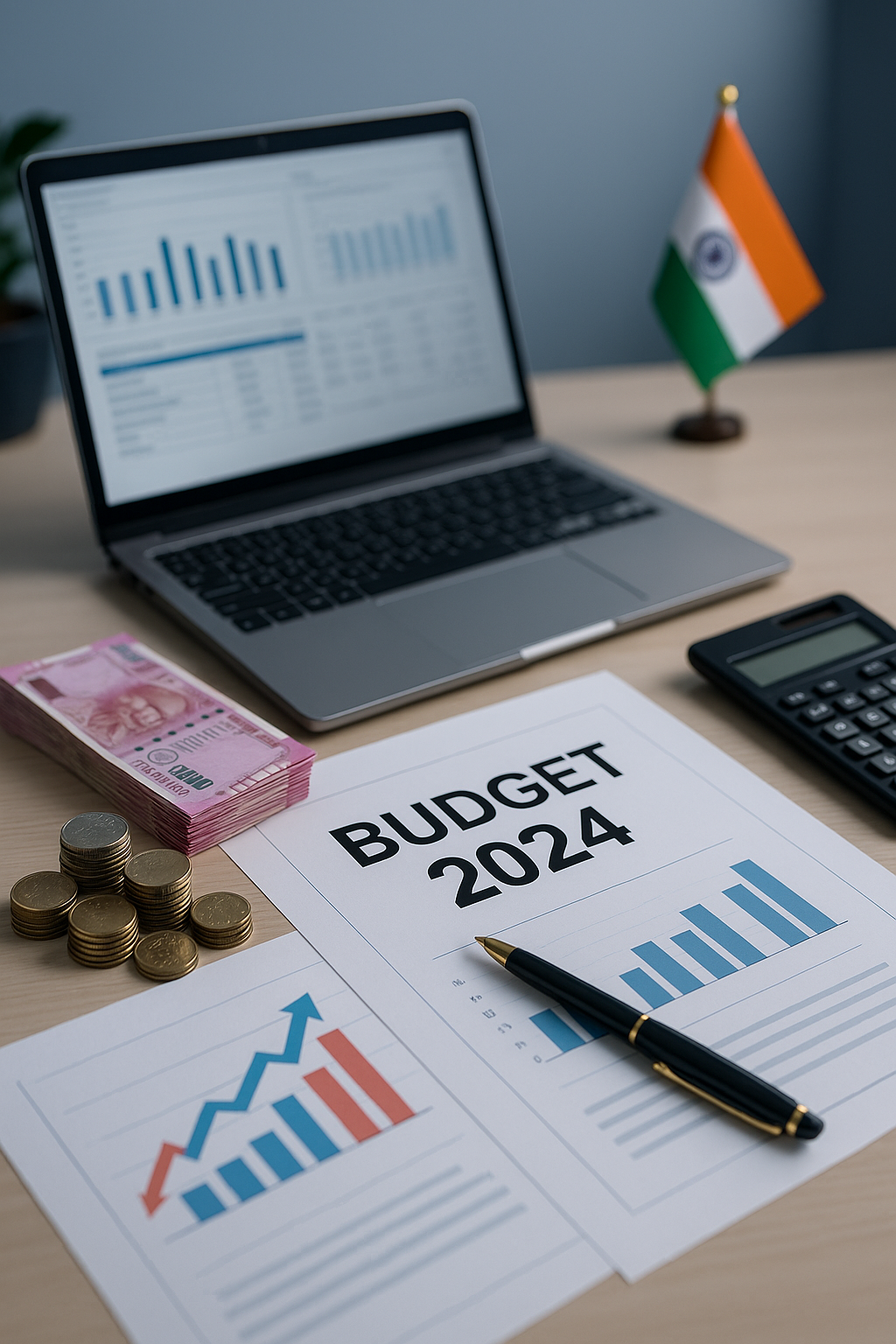
Union Budget 2026: A Comprehensive Analysis of Expectations and Predicted Direct Tax Reforms
As India marches towards becoming the third-largest economy in the world, the Union Budget 2026 stands as a pivotal moment for fiscal policy and personal taxation. With the next general election cycle still distant, the Finance Minister has the runway to present a budget that balances populist relief with prudent fiscal consolidation. For the common taxpayer, however, the focus remains singular: more disposable income and simpler compliance.
The buzz around the corridors of North Block and among leading tax consultancy firms like PwC, Deloitte, and EY suggests that 2026 might strictly focus on rationalization and boosting consumption. In this comprehensive guide, we delve deep into the expectations for direct tax changes, the much-debated Section 80C limit, housing sector boosts, and the future of the Old vs. New Tax Regime.
1. The Direct Tax Landscape: Context for 2026
The government's strategy over the last few years has been clear: move taxpayers to a simplified, exemption-free tax regime (the New Tax Regime). The Budget 2023 and 2024 made the New Regime the default and sweetened it with a higher standard deduction and revised slabs. However, a significant portion of taxpayers-especially those with home loans and long-term savings-still cling to the Old Regime.
The Expectation
Budget 2026 is expected to be the final push to make the New Regime the *only* viable option for the majority, potentially by enhancing the basic exemption limits further or introducing limited deductions within it.2. Section 80C: The 1.5 Lakh Ceiling Barrier
Perhaps the most persistent demand from salaried individuals is the revision of the Section 80C deduction limit. The current limit of ₹1.5 lakh was fixed nearly a decade ago. Since then, inflation has significantly eroded the real value of this deduction.
Why an Increase is Critical
- Inflation Adjustment: To match the purchasing power of ₹1.5 lakh from 2014, the limit should ideally be adjusted to at least ₹2.5 lakh to ₹3 lakh.
- Savings Rate: India's household savings rate has seen pressure. Increasing 80C encourages long-term investments in PPF, ELSS, and Life Insurance, channeling funds into infrastructure and nation-building.
Expert Analysis (PwC & Others)
Analysts from firms like PwC India have consistently advocated for a hike. They argue that if the government wants to retain the Old Regime for a few more years, hiking 80C is essential to provide genuine relief to the middle class. However, the counter-argument is that raising 80C runs contrary to the philosophy of the exemption-free New Tax Regime. Prediction: A hike to ₹2 lakh might be on the cards, but it could be linked to specific infrastructure bonds or long-term pension products like NPS, rather than a blanket increase.3. Housing Sector: Section 24(b) and Affordable Housing
The real estate sector is a massive employment generator, and home loan borrowers have been feeling the pinch of higher interest rates. The current deduction limit for interest on home loans under Section 24(b) is capped at ₹2 lakh.
The Reality Check
With property prices in metros like Gurugram, Mumbai, and Bengaluru skyrocketing, a typical home loan of ₹50-70 lakh incurs an annual interest far exceeding ₹2 lakh. The capped deduction means the excess interest cost is fully borne by the taxpayer without tax relief.Expectations
- Hike to ₹5 Lakh: Industry bodies like CREDAI have demanded raising the limit to ₹5 lakh for self-occupied properties. This would significantly boost the housing market and aid first-time homebuyers.
- Affordable Housing Definition: The cost ceiling for "affordable housing" (currently ₹45 lakh) needs revision to ₹75 lakh to reflect market realities in major cities.
4. Standard Deduction: Relief for the Salaried
For the salaried class, the Standard Deduction acts as a flat relief to cover employment-related expenses. Currently standing at ₹50,000 (and raised to ₹75,000 in recent amendments for the New Regime), there is a strong clamor to increase this to ₹1,00,000.
Justification
Reviewing the rising cost of transportation, work-from-home infrastructure (for hybrid employees), and medical inflation, a ₹1 lakh standard deduction is seen as fair compensation. This would put more cash in the hands of employees, directly boosting consumption-a key economic engine.5. Capital Gains Tax: The Great Rationalization
One of the most complex areas of the Income Tax Act is Capital Gains Tax. Currently, we have:
- Different holding periods for different assets (12 months for equity, 24 for real estate, 36 for debt/others).
- Different tax rates (10%, 15%, 20% with indexation, slab rates).
The Agenda for Simplification
There is a strong expectation that the Finance Minister will propose a unified capital gains structure.- Uniform Holding Period: Moving towards a standard holding period (e.g., 24 months) across asset classes to qualify as Long Term.
- Uniform Rates: Streamlining rates to reduce arbitrage between asset classes.
- Equity Taxation: Fears of an increase in LTCG on equity (currently 10% for gains above ₹1 lakh) persist, but analysts believe the government will tread carefully to avoid spooking the booming stock markets.
6. The New Tax Regime: Making it Irresistible
The government wants the New Tax Regime to be the future. To achieve this, Budget 2026 might introduce:
- Deduction for Social Security: A partial deduction for NPS (National Pension System) contributions *within* the New Regime (similar to Section 80CCD(1B)).
- Higher Rebate Limits: Increasing the rebate limit under Section 87A to ensure income up to ₹8-9 lakh is effectively tax-free.
7. MSMEs and Ease of Doing Business
While individual tax grabs headlines, the backbone of the economy-MSMEs-anticipates:
- Presumptive Taxation Limits: Enhancing the turnover limits for Sections 44AD and 44ADA to reduce compliance burdens for more small businesses and professionals.
- TDS Rationalization: Reducing the sheer number of TDS sections and rates to simplify life for business owners who currently grapple with dozens of varying TDS rates (1%, 2%, 5%, 10%).
8. What the Experts Are Saying
Reports from PwC India and other major consultancy firms highlight a distinct theme for Budget 2026: "Stability with targeted relief."
- They do not strictly foresee a return to high-deduction regimes (like increasing 80C to 3 Lakhs) as it defeats the purpose of the simplified tax structure the government is building.
- Instead, they predict targeted relief in healthcare (increasing Section 80D limits) and green investments (deductions for EVs or solar installations).
- Compliance: A major expectation is the overhaul of the tax filing portal to handle the surge in traffic and the use of AI to process refunds faster (within 24 hours).
9. Conclusion: The Balancing Act
The Union Budget 2026 is not just an accounting statement; it is a policy document that signals the government's long-term intent. For the individual taxpayer, the dream remains a simple tax code where a significant chunk of hard-earned income isn't lost to taxes or inflation.
Key Takeaways to Watch: 1. 80C Limit: Will it finally move past ₹1.5 Lakh? 2. Home Loans: Will interest deduction limits align with property realities? 3. New Regime: Will it get sweetened further to encourage mass migration?
As we wait for February, one thing is certain: the Indian tax landscape is evolving. Smart taxpayers should keep an eye on these developments to optimize their financial planning for the coming fiscal year.
*** *Disclaimer: This article provides an analysis of expectations and market sentiment surrounding the Union Budget 2026. It is not official advice. Tax laws are subject to change upon the passing of the Finance Bill. Please consult CA Atul Mangal & Co for personalized tax planning.*