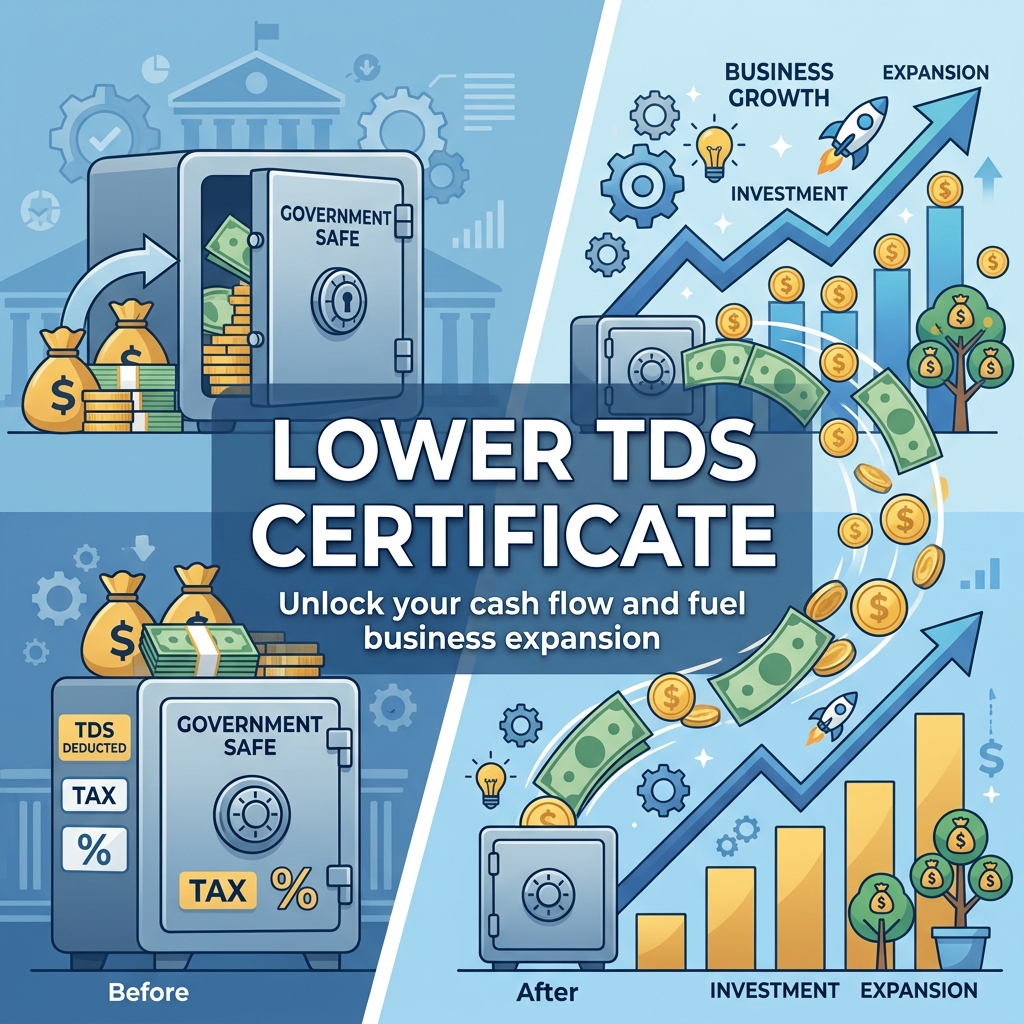
Every Rupee of Excess TDS Is Money You Cannot Use, Invest, or Grow
Most businesses and professionals focus on reducing their tax liability. However, many overlook a hidden cash flow challenge that impacts working capital throughout the year—excess Tax Deducted at Source (TDS).
While TDS is designed to ensure tax compliance, excessive deductions can unnecessarily lock up your funds for months. The result? Your money remains with the government instead of working for your business.
The Hidden Cost of Excess TDS
Imagine that ₹10 lakh is deducted as TDS during the financial year, but your actual tax liability is only ₹3 lakh.
What happens to the remaining ₹7 lakh?
You wait until filing your income tax return and receiving a refund. In many cases, that money remains inaccessible for several months.
During that period, the funds could have been used to:
- Support business operations
- Hire additional staff
- Invest in growth initiatives
- Purchase inventory or equipment
- Reduce borrowing requirements
- Earn returns through investments
Why Excess TDS Creates Cash Flow Problems
For businesses, consultants, freelancers, contractors, and professionals with lower effective tax rates, excess TDS can create significant working capital challenges.
Common issues include:
- Reduced liquidity during the year
- Dependence on loans or overdraft facilities
- Delayed business investments
- Difficulty managing operational expenses
- Long wait periods for tax refunds
The Solution: Apply for a Lower TDS Certificate
The Income Tax Act provides a solution through a Lower or Nil TDS Certificate.
If your estimated tax liability is lower than the TDS being deducted, you may be eligible to apply for a certificate that authorizes deductors to withhold tax at a reduced rate.
This helps align TDS deductions with your actual tax liability and improves cash flow throughout the year.
Key Benefits of a Lower TDS Certificate
Improved Cash Flow
Retain more of your earnings instead of waiting for refunds.
Better Working Capital Management
Access funds when your business needs them most.
Reduced Refund Dependency
Minimize large tax refunds and lengthy processing timelines.
Greater Investment Opportunities
Put your money to work immediately instead of allowing it to remain blocked.
Enhanced Financial Planning
Manage finances with greater certainty and flexibility.
Who Should Consider Applying?
A Lower TDS Certificate may be beneficial for:
- Businesses with lower taxable income
- Startups and growing enterprises
- Consultants and professionals
- Contractors and service providers
- Individuals with substantial TDS deductions
- Taxpayers expecting lower tax liability than previous years
Don't Wait Until the End of the Financial Year
Many taxpayers realize the impact of excess TDS only when they calculate their refunds at year-end.
By then, the opportunity to improve cash flow has already been lost.
The earlier you apply for a Lower TDS Certificate, the sooner you can retain access to your funds and use them for productive purposes.
Final Thoughts
Cash flow is the lifeblood of any business.
Allowing excess TDS to accumulate means locking away capital that could otherwise help your business grow, invest, and thrive.
Remember:
Every rupee of excess TDS is money you cannot use, invest, or grow.
If your TDS deductions are significantly higher than your expected tax liability, now is the time to explore a Lower TDS Certificate and keep your money working for you—not sitting idle while you wait for a refund.
---*Disclaimer: This article is for informational purposes only and should not be considered as tax, legal, or financial advice. For personalized advice regarding TDS deductions and Lower TDS Certificates, please consult CA Atul Mangal & Co.*