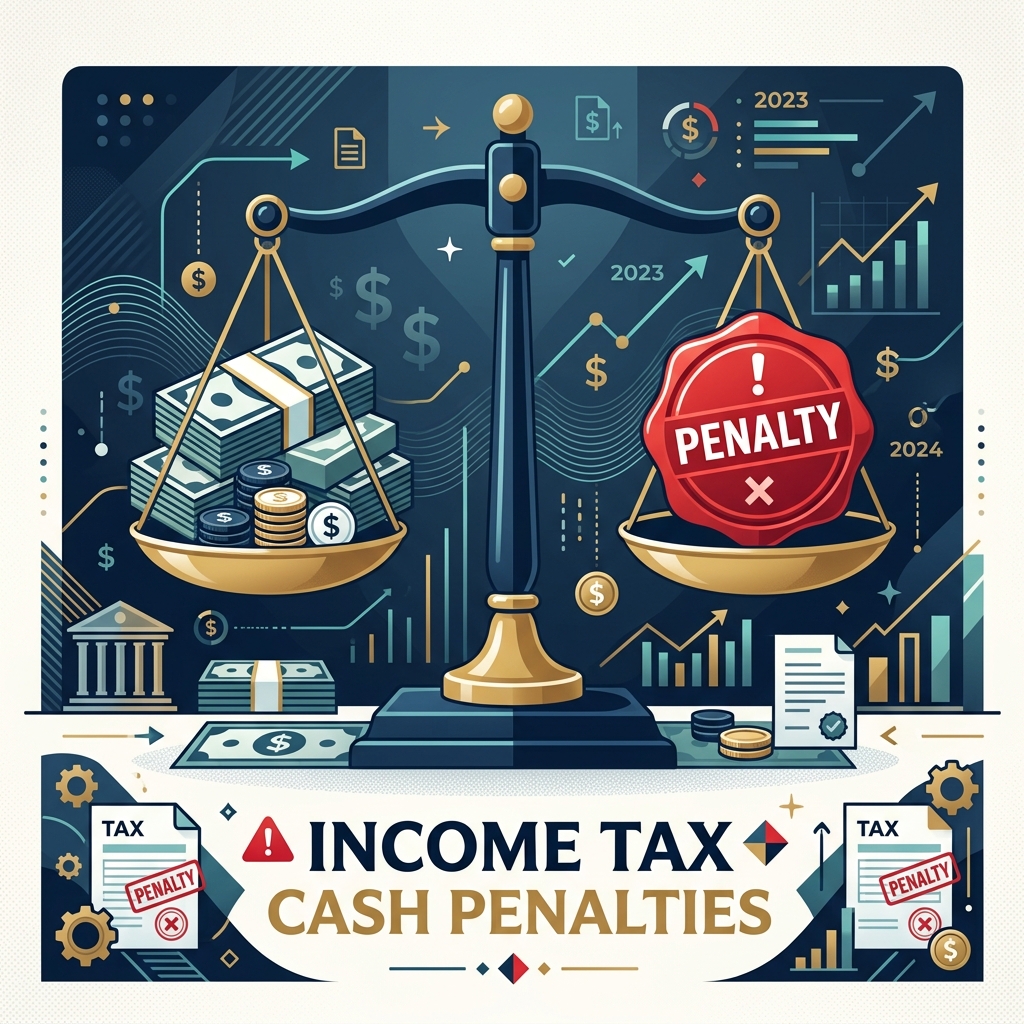
Accepting Too Much Cash? One Wrong Transaction Can Trigger Income Tax Penalties
Despite the rapid growth of digital payments, cash transactions continue to be common in many businesses and personal dealings. However, what many taxpayers do not realize is that accepting large amounts of cash can have serious tax consequences.
A single transaction that violates the Income Tax Act can result in significant penalties, scrutiny from the Income Tax Department, and unnecessary legal complications.
If you regularly deal in cash, understanding these rules is essential to stay compliant and avoid costly mistakes.
Why Does the Tax Department Monitor Cash Transactions?
The government has been actively promoting transparency in financial transactions and reducing the use of unaccounted money.
Large cash transactions are often monitored because they can be used to conceal income, evade taxes, or facilitate unreported financial activities.
As a result, several provisions under the Income Tax Act restrict the acceptance and payment of cash beyond specified limits.
The ₹2 Lakh Cash Receipt Rule
One of the most important provisions that taxpayers should know is the restriction on accepting cash of ₹2 lakh or more.
Under the law, a person cannot receive ₹2 lakh or more in cash:
- From a single person in a day
- For a single transaction
- For transactions relating to one event or occasion
- Accepting ₹2.5 lakh in cash for the sale of goods may violate the provision.
- Receiving large cash payments for services could also attract penalties.
Penalties Can Be Severe
The consequences of violating cash transaction rules can be significant.
In certain situations, the penalty may be equal to the amount of cash received in violation of the law.
For example, if a prohibited cash transaction of ₹3 lakh is identified, the penalty could potentially be as high as ₹3 lakh.
This makes compliance extremely important.
Businesses Are Especially Vulnerable
Small businesses, traders, contractors, and professionals often accept cash from customers.
Common risk areas include:
- Sale of goods
- Professional services
- Property transactions
- Event-related collections
- Business-to-business payments
Use Banking Channels Whenever Possible
To minimize risk, taxpayers should prefer:
- Bank transfers
- UPI payments
- NEFT/RTGS transactions
- Account payee cheques
- Digital payment platforms
Maintain Proper Records
Good record-keeping is equally important.
Always maintain:
- Invoices
- Receipts
- Bank statements
- Customer payment records
- Transaction documentation
Conclusion
Cash may seem convenient, but accepting large amounts without understanding the rules can be extremely costly.
A single non-compliant transaction can trigger penalties, notices, and unwanted scrutiny from the Income Tax Department.
The safest approach is simple: understand the applicable limits, use banking channels wherever possible, and maintain proper documentation for every transaction.
When it comes to tax compliance, prevention is always better—and cheaper—than dealing with penalties later.
---*Disclaimer: This article is for informational purposes only and should not be considered as tax, legal, or financial advice. For personalized advice regarding cash limits and Income Tax compliance, please consult CA Atul Mangal & Co.*